PERSPECTIVE Consumers dine out more amid job growth and lower gas prices
March 31, 2016 - Consumer spending on restaurants has accelerated in recent years, thanks in part to strong growth in the job market, especially for millennials, and sustained lower gas prices, according to Visa Business and Economic Insights analysis and the Visa Retail Spending Monitor (RSM)1.
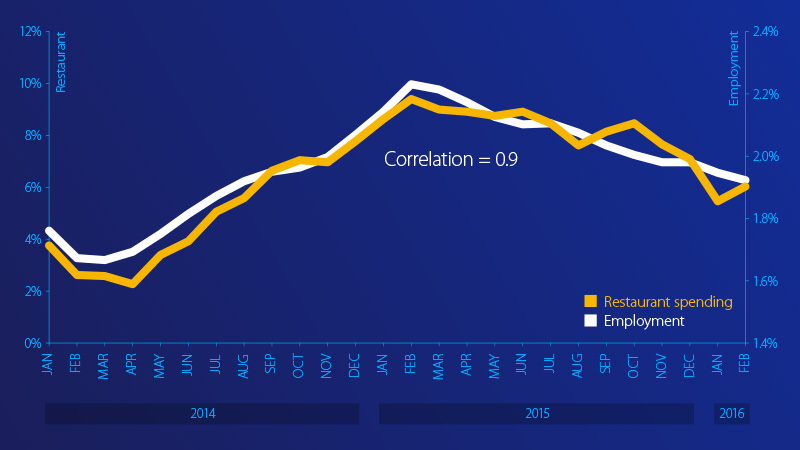
Since mid-2014, fast food and full-service restaurant sales have grown steadily–outpacing growth of overall retail sales and closely mirroring employment gains. Robust U.S. employment growth of 3-4 million net new jobs created in 2014 and 2015 closely paralleled an uptick in restaurant spending, which peaked at nearly 10 percent growth in early 2015.
The economy added an average of 200,000-300,000 jobs per month at that time, corresponding to growth above two percent year-over-year (YoY), the strongest since 2000. This helped to drive the unemployment rate down to below five percent by the end of 2015.
Restaurant spending highly correlated to job growth
(Year-over-year, three-month moving average)
Source: Visa Retail Spending Monitor, Visa Business and Economic Insights,
Bureau of Labor Statistics (BLS)
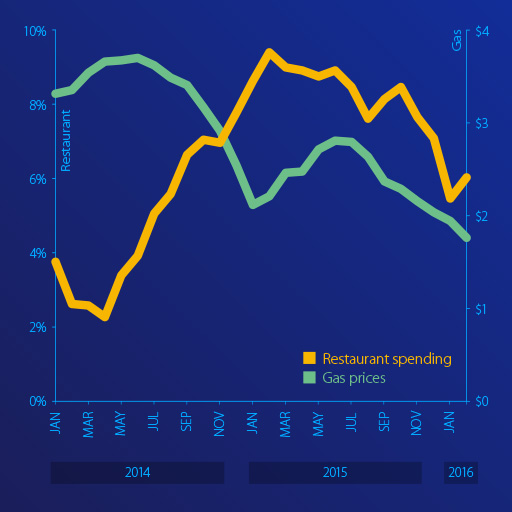
Lower gas prices fuel restaurant spending
Source: Visa Retail Spending Monitor, Visa Business and Economic Insights, Energy Information Administration (EIA)
Restaurant spending increased around the same time that gas prices plummeted, freeing up funds for discretionary spending. Restaurant credit spending growth began to accelerate in early 2014, with lower-income households (those earning less than $50,000/year) leading the way–the consumer group benefitting most from the lower gas prices.
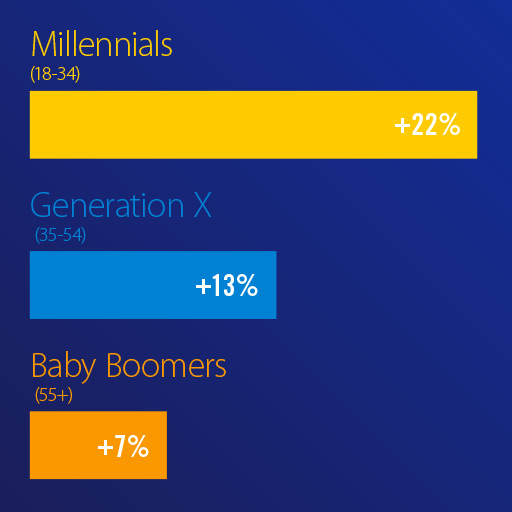
Younger consumers drive restaurant spending growth
Percent of survey respondents that report dining out more often this year compared to last year
Source: Visa Business and Economic Insights; Prosper Insights and Analytics
Millennials also increased their restaurant spending. A recent Visa consumer survey2 shows that more than 20 percent of adult Millennials (consumers aged 18-34) are dining out more frequently than in the previous year, compared to roughly 13 percent of Gen X consumers (aged 35-54) and only seven percent of Baby Boomers (consumers 55 and older).
Visa Business and Economic Insights anticipates growth of an average 200,000 jobs per month throughout 2016–still solid, but a slight deceleration from the past two years. Restaurant spending also slowed slightly–hovering around 6 percent growth in February of this year–but remains strong as Americans of all ages enjoy one of their favorite pastimes: dining out.
References
1 RSM reports spending on all forms of payment.
2 Visa Business and Economic Insights survey conducted by Prosper Insights and Analytics, January 2016.

As vice president of the Visa Business and Economic Insights team, Bruce Cundiff is responsible for providing economic and business intelligence, analysis and insights to Visa executives and clients. He reports directly to Chief Economist Wayne Best.
Cundiff has 20 years of payment industry experience, including positions at merchant acquirers, payment software and hardware solution providers, as well as research and consulting organizations focused solely on the payments industry. Cundiff holds a B.A. in history and Asian studies from Tufts University and an M.B.A. from the Kenan Flagler Business School at the University of North Carolina Chapel Hill.

Corrine Fusso is an associate economist with the Business and Economic Insights team at Visa. Prior to joining Visa, Fusso worked as a business intelligence consultant for Microsoft and JSTOR, where she analyzed data and provided insights to influence business decisions. Fusso has bachelor's degrees in economics and international studies, both from the University of Washington in Seattle. She also earned an M.A. degree in economics from Claremont Graduate University. Fusso is the president of the San Francisco chapter of the National Association of Business Economics.
You may also be interested in

Visa Performance Solutions
Acquire, retain and grow your customer base with data-driven insights.
Chinese economy has declined, but not consumer outlook
The Chinese economy decline has impacted the global economy, but not consumer sentiment.
U.S. economic outlook steady despite weaker global trends
Visa's chief economist Wayne Best offers insights on U.S. and global economic trends.