By Dalberg Advisors and the Global Development Incubator
Benjamin is a pharmacist on the outskirts of Ibadan, Nigeria. He is tech-savvy, has multiple bank accounts and likes to use mobile money. His pharmacy is thriving, bringing in nearly 100 customers every day. However, most sales are done in cash and the payment terminal lies unused under the cashier’s counter. “The network is always down in this area,” Benjamin says. “Sometimes we take the machine outside the shop to try to get a signal and the customer does not want to wait.”
Across the world, in a suburb of Bogota, Colombia, Maria and her husband run a small stationery store. They started the store with a loan from the bank and ordered a payment terminal to accept cashless payments soon after. But they discovered that the fees are too high to justify using the terminal very often—in fact, they began offering customers a discount for paying in cash rather than using their cards. “We want to give customers the convenience, but it’s just too expensive,” they said.
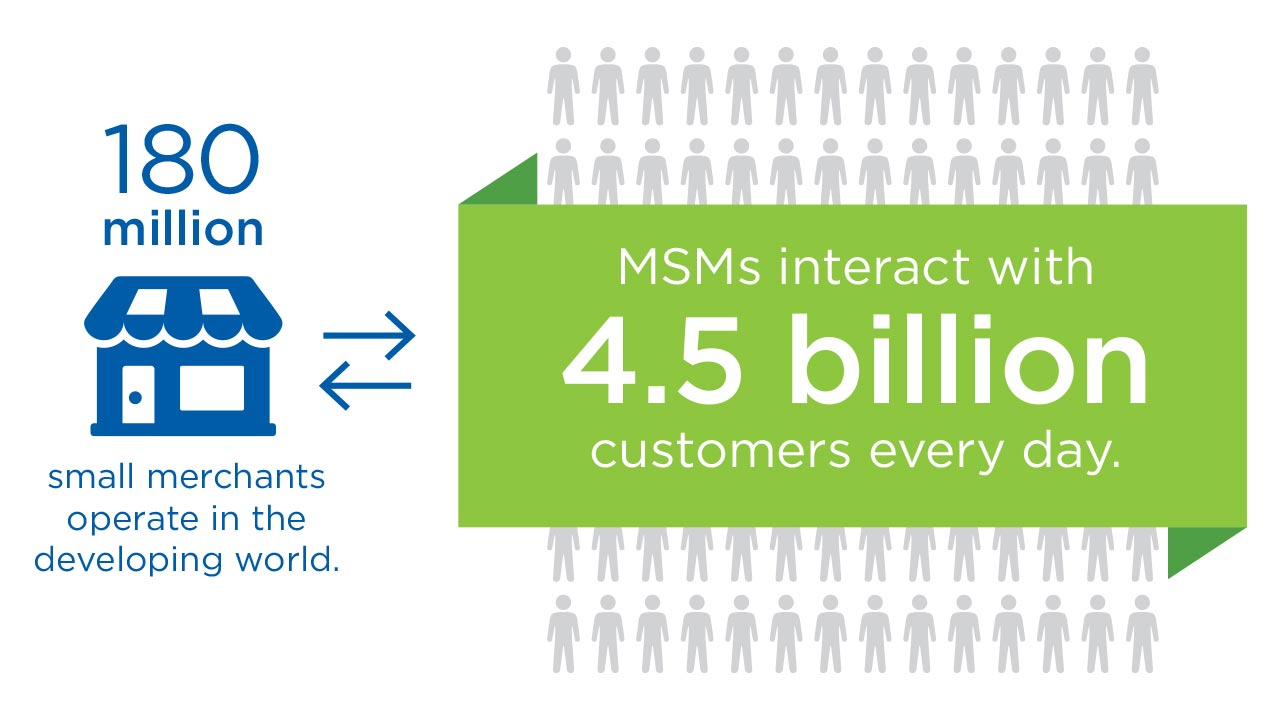
Benjamin and Maria are two of the 180 million small merchants who operate in developing and emerging markets around the world. These micro and small merchants conduct financial transactions worth an estimated $6.5 trillion per year and interact with more than 4.5 billion customers every day.
Although they run small and often informal businesses, these merchants have the potential to jumpstart the growth of a cashless ecosystem. Digital payment uptake among small merchants represents a critical gateway to financial inclusion for themselves and low-income individuals, as well as a substantial commercial opportunity for the financial sector; transaction fees alone could result in an estimated $35 billion a year in additional value.
However, most card-based digital payment systems currently offer few benefits to merchants like Benjamin and Maria. As they noted, cashless acceptance can be time-consuming and expensive for small merchants because of issues like poor connectivity, high transaction and maintenance costs, and strict regulations. Furthermore, there is often little knowledge or demand for digital payments from micro and small merchants’ customers.
A new report titled “Small Merchants, Big Opportunity: The Forgotten Path to Financial Inclusion” explains how actors throughout the cashless ecosystem can unlock the social and commercial opportunities of increased financial inclusion for small merchants through expanded cashless acceptance. Drawing on conversations with more than 400 merchants and 75 key financial stakeholders, the report concludes that existing digital payment platforms must improve their offerings, and new digital payment products offering speed and interoperability must be brought to scale. Financial regulators, governments, and businesses can introduce and support policies that reduce barriers and facilitate this cashless ecosystem, as well as promote cashless transactions by using digital payment systems in their interactions with merchants and customers.
Read the full report and download the infographic here.